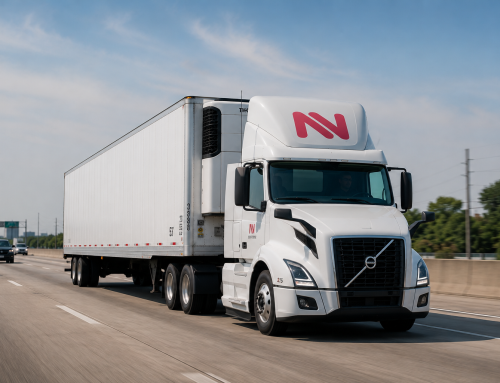
A reefer load can look fine at pickup and still be in trouble three hours later. A door gets opened too long. A unit starts short cycling. Product near the nose holds temp, but freight at the rear starts drifting. That is why shippers ask how reefer temperature monitoring works. They do not want guesses after delivery. They want to know what happened during transit, when it happened, and whether the load stayed in range.
How reefer temperature monitoring works in real transit
At the basic level, a reefer trailer has a refrigeration unit that cools or heats the trailer to a set point. Temperature monitoring is the system that checks whether the air and, in some cases, the cargo environment stay within that target range while the load is moving.
The reefer unit itself reads temperature through sensors. Those sensors feed data to the controller on the unit. The controller compares the actual trailer temperature to the set point and tells the unit when to run, when to idle, and how hard to cool or heat. That is the control side.
Monitoring adds visibility. It records the temperature over time and sends updates to the carrier, shipper, or both. Depending on the equipment, that can mean onboard data logs only, or live telematics that transmit readings back to dispatch and operations teams. The difference matters. A stored record tells you what happened after the fact. Live monitoring gives you a chance to act before a problem turns into a rejected load.
For freight managers, that is the whole point. If a load of produce, dairy, frozen food, or pharmaceuticals starts drifting out of range, time matters. Waiting until delivery to review the log is too late.
What the system is actually monitoring
A lot of people hear “temperature monitoring” and think it is one number on a screen. It is not that simple. Reefer equipment can track several data points, and each one tells a different part of the story.
The first is the set point. That is the temperature the trailer is supposed to maintain based on the shipment requirements. Then there is return air temperature, which is the temperature of the air coming back to the unit from inside the trailer. There is also supply air temperature, which is the air the unit pushes back into the trailer.
That difference matters. Supply air can look cold while return air tells you the load itself is warming up. If you only look at one number, you can miss what is really happening inside the trailer.
Some setups also track ambient outside temperature, fuel level, run hours, alarm codes, and door events. On a sensitive load, those extra signals help explain why temperature changed. If the trailer temp spikes right after a door opening in Arizona heat, that is a very different issue than a spike tied to a unit alarm in the middle of the night.
Air temperature is not always product temperature
This is where problems start if expectations are not clear.
Most reefer systems monitor trailer air temperature, not the internal temperature of every pallet or case. Product temp changes slower than air temp. A trailer can recover quickly after a door opening, but warm product loaded at the dock may stay warm much longer. The reverse can also happen. Air temperature can swing during normal reefer cycles while the product stays stable.
That is why load condition depends on more than the reefer setting. Pre-cooling, proper loading, airflow, and how long the trailer sits with doors open all matter.
The role of sensors, controllers, and telematics
The sensor is where the reading starts. If the sensor is inaccurate, damaged, or poorly placed, the rest of the system is working off bad information. Good reefer monitoring depends on sensor calibration and regular equipment checks.
The controller is the decision maker. It takes the readings and adjusts operation based on the mode selected. Some loads run in continuous mode, where the unit stays on to hold a tighter range. Others run in start-stop mode, where the unit cycles on and off as needed. Continuous mode often gives tighter control, but it also uses more fuel and run time. Start-stop can be fine for the right freight, but not every product can tolerate wider swings.
Telematics is what gives operations visibility away from the trailer. The trailer sends data through a communication system so dispatch or the shipper can see temp readings, alarms, and status in near real time. That is what turns monitoring into action.
If a unit throws an alarm, operations can contact the driver right away. If the trailer is drifting because of a door issue or incorrect set point, that can be checked before the load is lost. You still need the right people watching the data and responding. Technology alone does not save freight.
Why temperature can drift even when the unit is running
Shippers sometimes assume that if the reefer unit is on, the load is protected. Not always.
Bad airflow is one of the biggest issues. If freight is loaded too tight against the walls or stacked in a way that blocks circulation, cold air cannot move through the trailer the way it should. The unit may be doing its job, but the load still develops hot spots.
Warm loading is another issue. A reefer trailer is built to maintain product temperature, not pull down hot freight fast. If product goes in above spec, the unit may struggle to bring the trailer back into range, especially on dense loads.
Door openings also matter more than people think. Every stop, inspection, and delay at a dock affects the environment inside the trailer. In hot weather across the Southwest, that effect shows up fast.
Then there is equipment condition. Low fuel, sensor faults, blocked air chutes, battery problems, or reefer alarms can all affect temperature performance. Monitoring helps catch those issues, but it does not replace maintenance.
What shippers should expect from a monitored reefer load
A monitored reefer load should give you a clear chain of information. You should know the required set point before pickup. You should know the trailer was running correctly at dispatch. And if there is an issue in transit, you should get a real update, not silence until delivery.
That does not mean every shipment needs constant phone calls. It means the carrier should be able to verify trailer status, check readings, and respond when something changes.
For some freight, a standard temperature log is enough. For higher-risk or claim-sensitive loads, live visibility matters more. It depends on the commodity, the lane, the transit time, and how tight the temperature tolerance is.
If you are shipping frozen goods, short spikes may be less critical than for fresh produce or pharmaceuticals. If you are moving a one-day run versus a cross-country shipment, the level of monitoring you need can be different too.
Monitoring works best when the shipping instructions are clear
A lot of reefer issues start before the truck leaves.
If the rate confirmation, bill of lading, and pickup instructions do not clearly state the required set point, mode, and any special handling needs, mistakes happen. If one document says 34 degrees and another says 36, somebody has to stop and verify before the trailer gets loaded.
The same goes for continuous versus start-stop, frozen versus chilled, and whether the product is pre-cooled. Clear instructions help the driver and the carrier set the trailer correctly from the start.
How carriers use reefer monitoring to prevent claims
Good carriers do not wait for a receiver to say the load arrived warm. They check trailer status during the run, especially on sensitive freight and longer lanes.
That means watching for alarm codes, checking that the reefer is maintaining the assigned set point, and confirming the unit stays fueled and operating. If something changes, the driver gets contacted and the issue gets looked at while there is still time to fix it.
It also means documenting what happened. A clean temperature record matters when there is a dispute over product condition. It helps show whether the trailer stayed in range, whether there were door events, and whether the issue likely started before pickup.
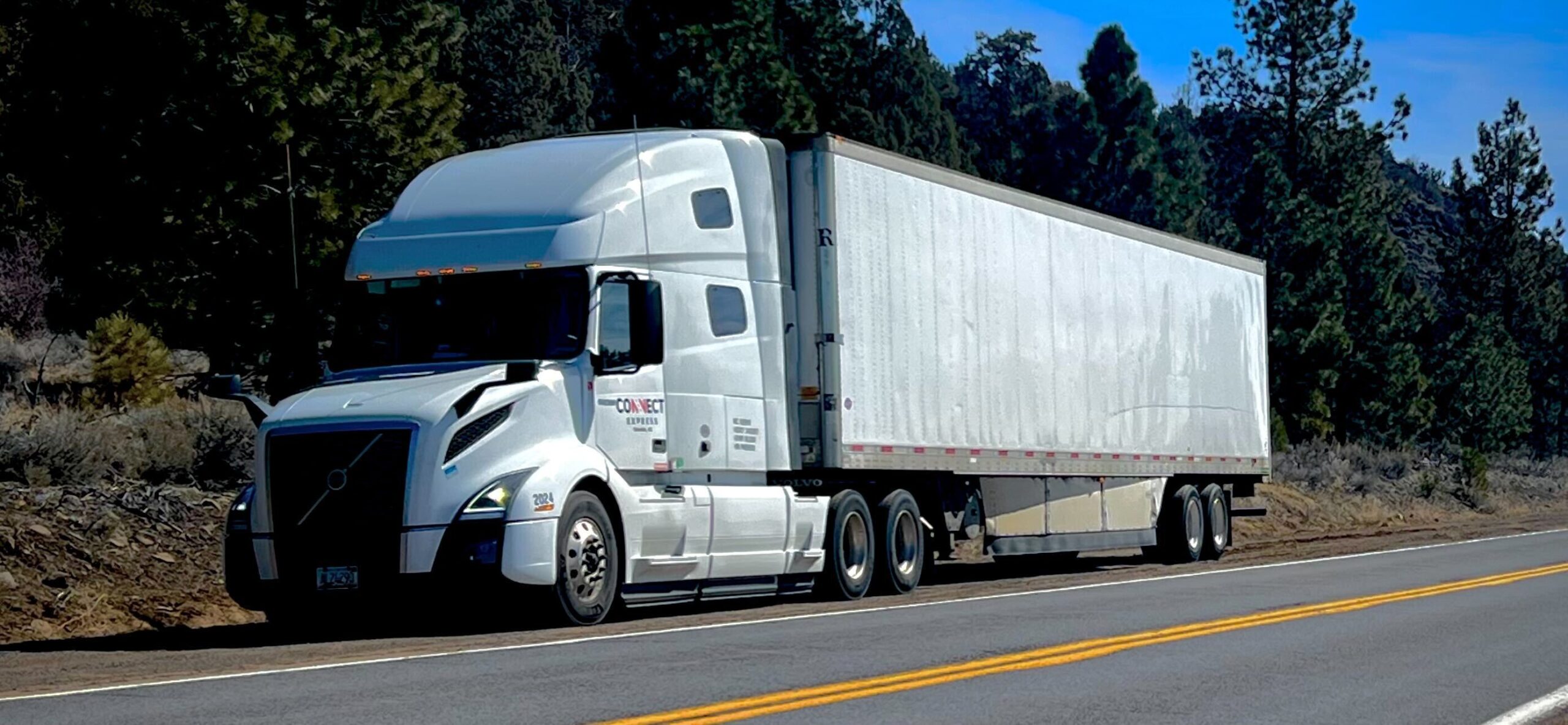
At ConnectExpress LLC, based in Phoenix, that kind of visibility matters on refrigerated freight moving across hot Southwest lanes and long nationwide runs. Reefer freight does not leave much room for excuses. You need the trailer set right, the unit running right, and real updates if anything changes.
Where monitoring has limits
Temperature monitoring is useful, but it is not magic.
It does not fix bad loading. It does not cool down product that was loaded warm enough to fail at delivery. It does not tell the full story if the wrong set point was entered from the start. And if nobody is watching the alerts, live data does not help much either.
There is also a difference between seeing trailer air temperature and proving product quality. For some high-value shipments, shippers may use added sensors or separate validation methods inside the load. That depends on the product and the claim risk.
The practical takeaway is simple. Reefer monitoring is one part of cold chain control. A big part, but still one part.
If you are shipping temperature-sensitive freight, ask direct questions before pickup. What set point will be used? What mode will the unit run in? Is the trailer being monitored live or logged only? Who gets notified if temp drifts? Straight answers up front save a lot of trouble later.
Cold chain freight goes bad quietly. The trailer still rolls. The paperwork still moves. The problem usually shows up at the receiver. Good temperature monitoring gives you a chance to catch it before that point, and that is what keeps a reefer load from turning into a claim.