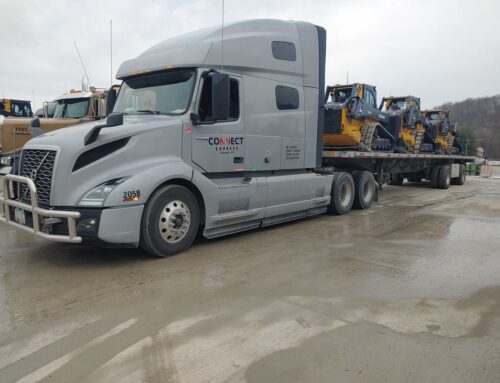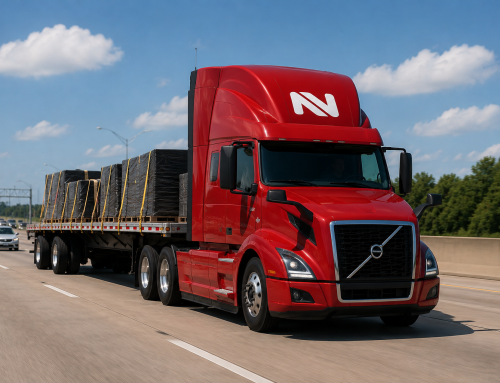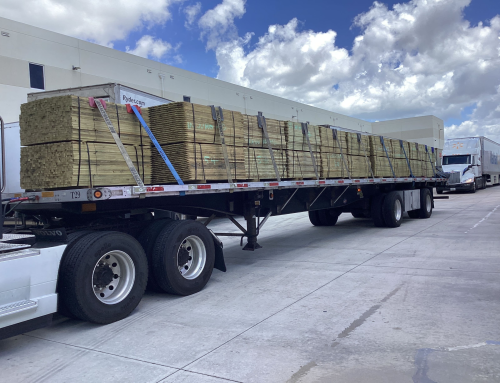
A missed detail on a heavy equipment shipment usually does not show up at pickup. It shows up when the wrong trailer arrives, the machine is not ready to load, or the driver gets stopped for a permit issue. That is why a solid flatbed shipping guide for heavy equipment starts before the truck is dispatched.
If you ship machinery, attachments, or jobsite equipment, the goal is simple. Get the right trailer. Secure the load correctly. Move it on time. Give everyone real updates. Heavy equipment shipments leave very little room for guessing, especially when weight, dimensions, and loading conditions change from one move to the next.
What makes heavy equipment shipping different
Heavy equipment does not move like palletized freight. A forklift, skid steer, excavator, loader, or boom lift brings different risks. Some units have uneven weight distribution. Some need chains at specific securement points. Some can drive onto a trailer. Others need a crane or loading dock support. A machine might fit by weight but sit too tall once loaded.
That is why the first question is not just, “How fast can you pick it up?” The better question is, “What exactly are we loading?” If the answer is vague, the shipment is already off to a bad start.
The basics matter here. Exact make and model. Overall length, width, height, and weight. Whether the unit runs. Whether buckets, blades, booms, or other attachments stay installed. Pickup and delivery site conditions also matter. Dirt lot, paved yard, active jobsite, or tight industrial space all change how the move should be planned.
Flatbed shipping guide for heavy equipment: start with the trailer
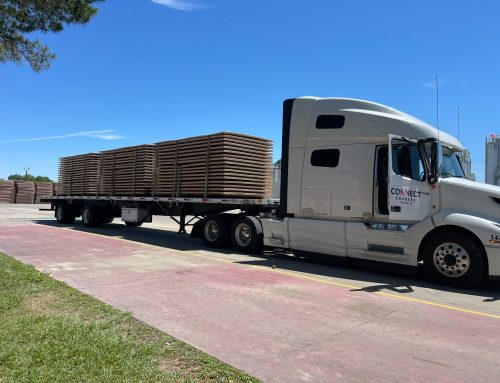
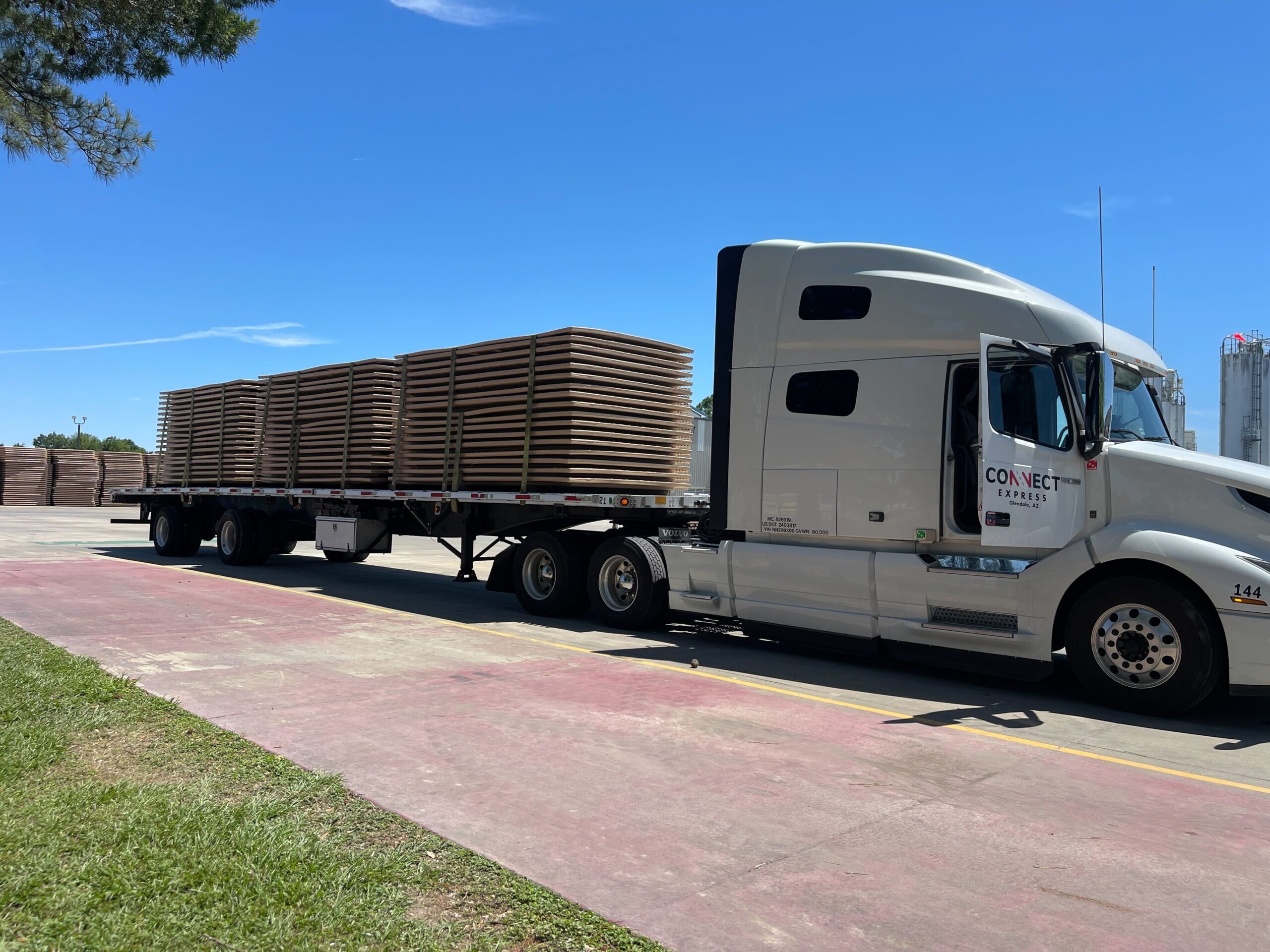
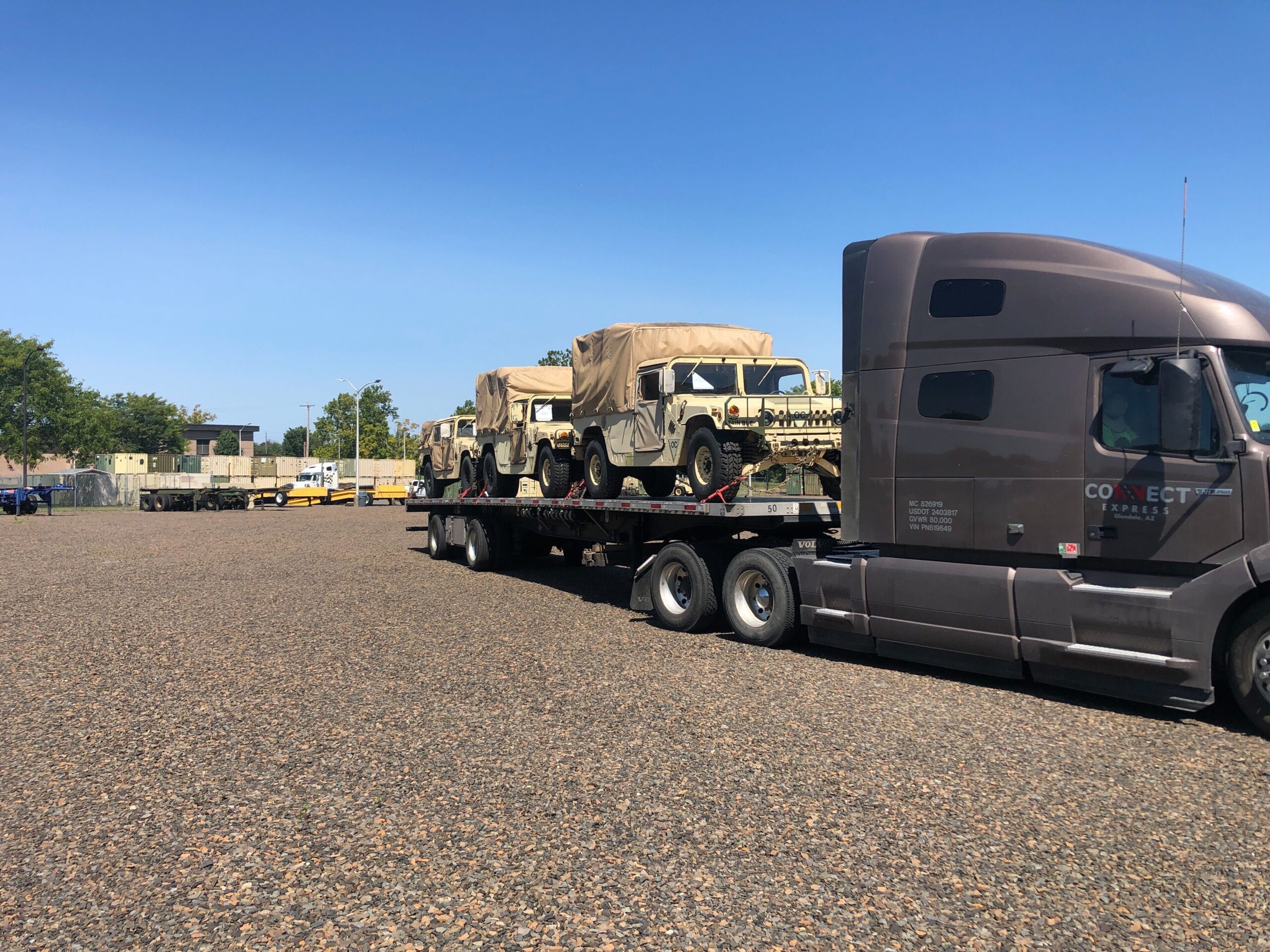
Not every heavy equipment load belongs on the same trailer. Flatbed is often used as a catch-all term, but trailer selection needs to match the machine.
A standard flatbed works for some equipment, especially when the unit can be loaded safely and stays within legal height and weight once secured. But many machines are better suited to a step deck or lowboy. A step deck helps when height is the issue. A lowboy helps with taller and heavier equipment that would not clear bridges on a standard deck.
This is where mistakes happen. A shipper may give deck length and total weight, but leave out the loaded height. Or the machine may technically fit on paper, but axle placement creates a balance problem. Good planning means looking beyond whether it can be loaded. You need to know whether it can be moved legally and safely.
If your freight team is managing repeated equipment moves, build a basic trailer profile for each machine you ship often. That saves time and cuts down bad assumptions.
Standard flatbed, step deck, or lowboy?
A standard flatbed is common for legal-size equipment with manageable deck height. It is flexible and widely available, but that does not make it the right choice every time.
A step deck gives you lower deck height behind the front section. That extra clearance can be the difference between a legal move and a permit problem.
A lowboy is usually the right call for larger construction and industrial equipment. It keeps the machine lower to the ground and handles heavier loads better. The trade-off is that lowboy moves often require more planning, and availability can be tighter depending on the lane.
Accurate dimensions are not optional
Bad dimensions create bad dispatches. If the machine is wider, taller, or heavier than listed, the driver can lose hours waiting on the right permit, the right route, or a trailer swap. In some cases, the truck cannot be loaded at all.
Measure the equipment in shipping condition, not catalog condition. That means counting installed attachments, cab height, folded or unfolded booms, and anything else that affects the loaded profile. If a bucket can be removed and shipped separately, that may simplify the move. Sometimes it does not. It depends on labor, handling, and delivery timing.
Weight should be verified, not estimated. Manufacturers’ specs help, but field modifications, extra fuel, mounted tools, and wear components can change the actual number.
Why loaded height causes so many issues
Shippers usually pay attention to width and total weight first. Height gets missed more often. On heavy equipment, height is often what pushes the load into a different trailer type or permit category.
A machine that looks fine in the yard can become a route problem once it is sitting on trailer tires and suspension. That is why experienced carriers ask for dimensions early and ask again if anything changes before pickup.
Securement is where safety gets real
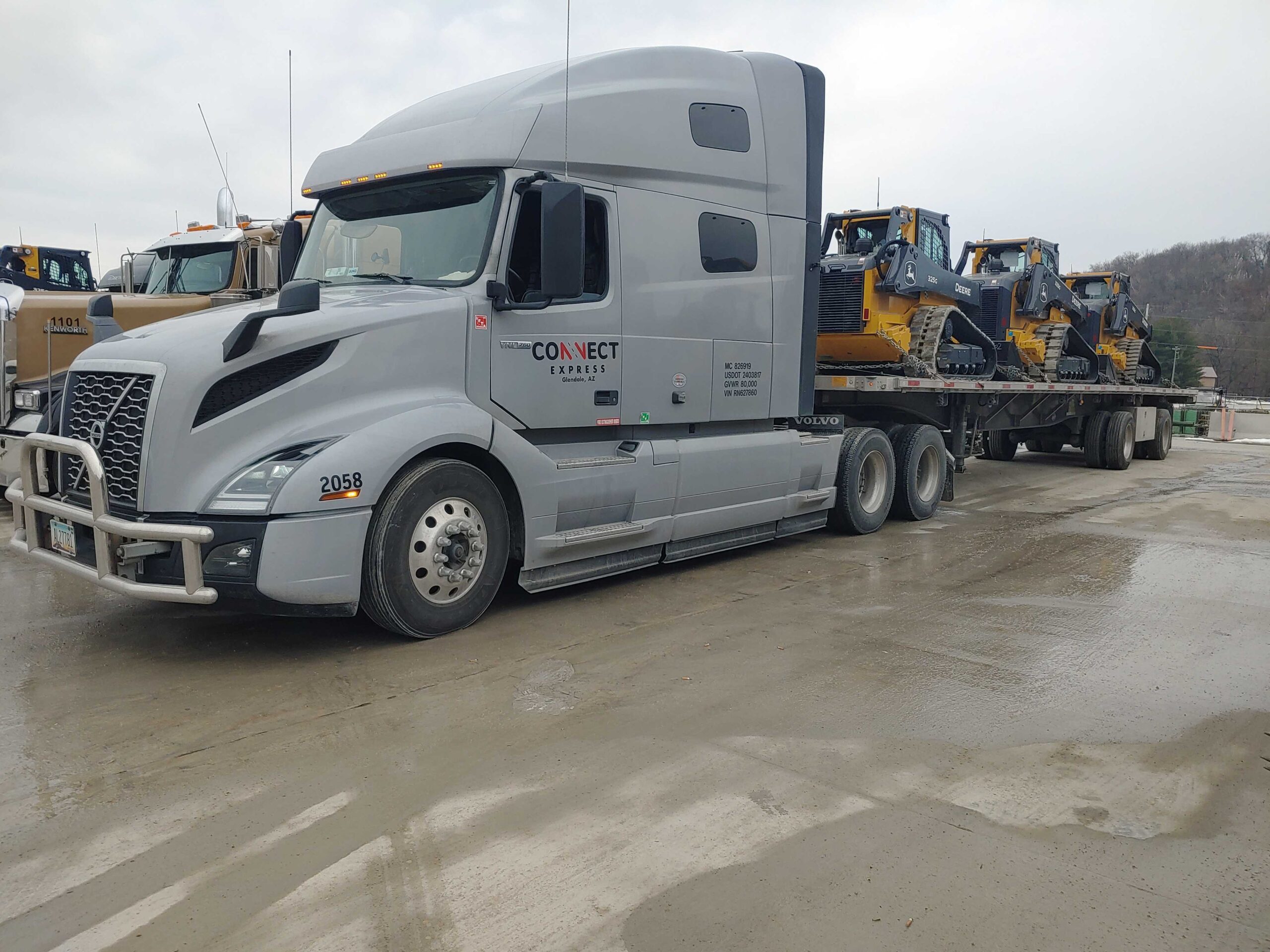
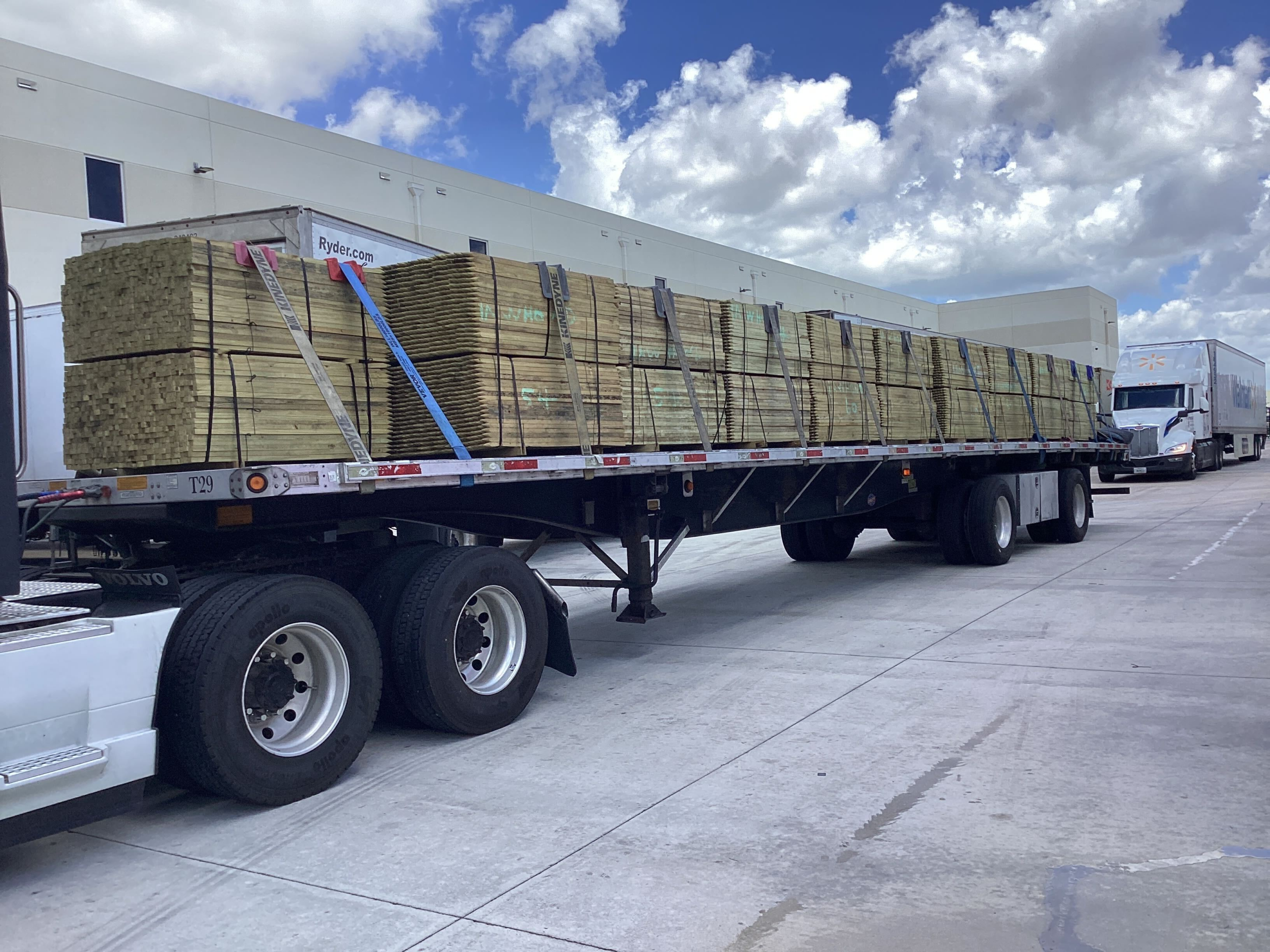
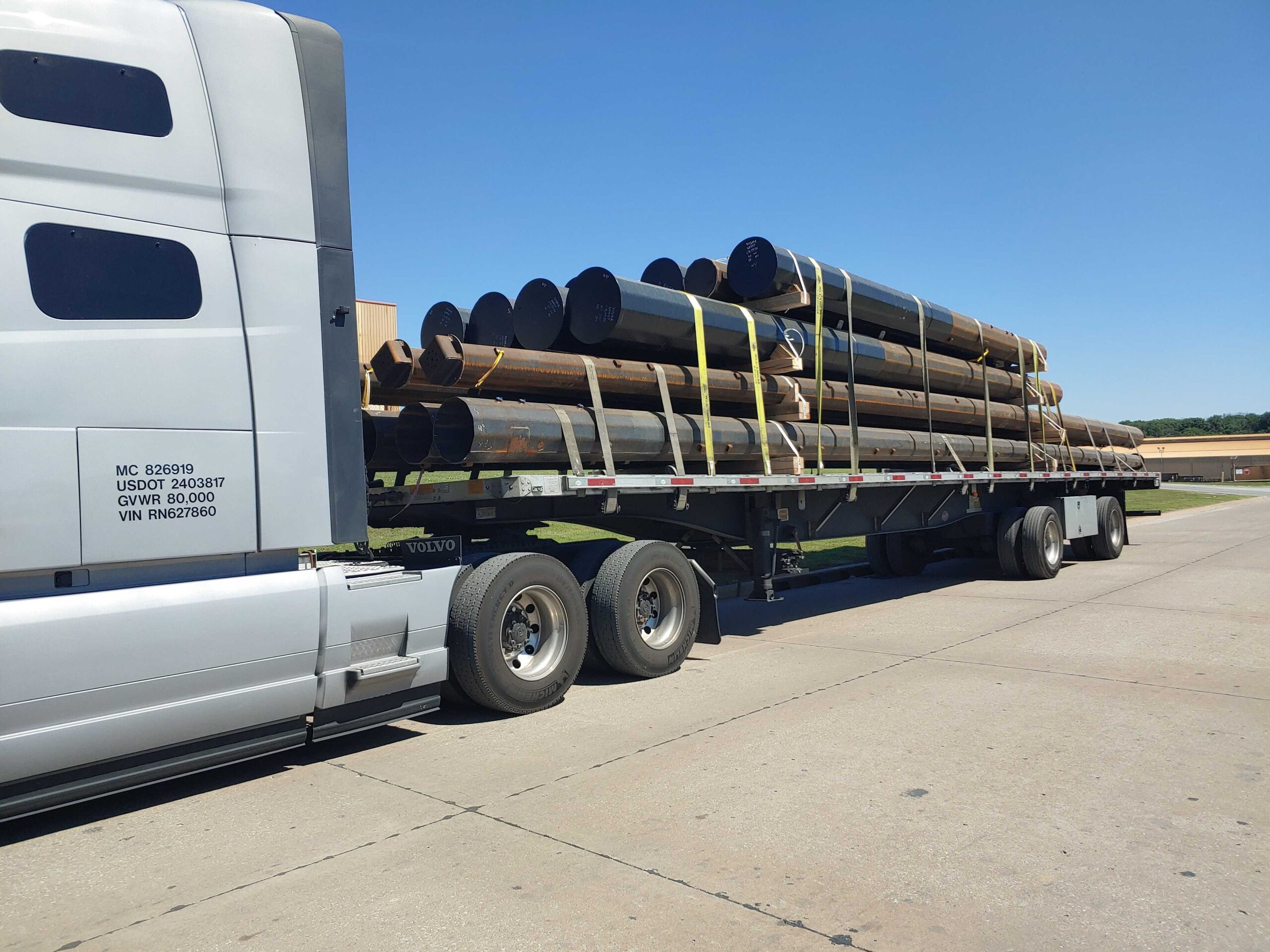
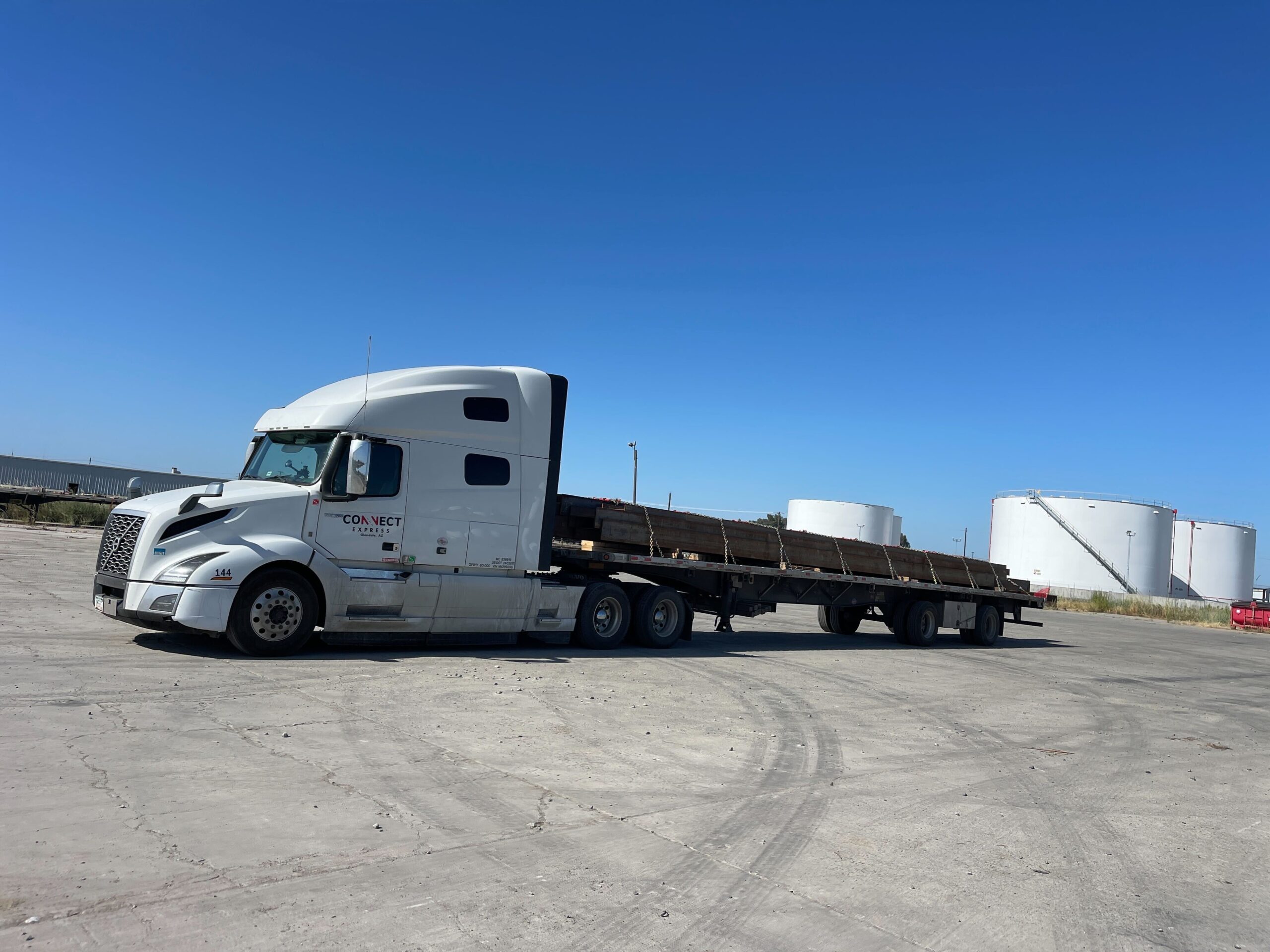
Securement is not a paperwork step. It is the load. Heavy equipment must be restrained based on weight, shape, and contact points. Chains, binders, edge protection, blocking, and attachment securement all need to match the machine and the trailer.
The number of tie-downs matters, but placement matters just as much. A piece of equipment with tracks, articulated sections, or separate attachments may need a more detailed securement plan than a straightforward wheeled machine. Buckets, arms, and accessories also need to be immobilized. If they can move, they must be secured.
This is not the place for assumptions from a previous shipment. Similar machines can require different securement approaches. The driver should know what is being loaded before arrival, and the pickup site should allow enough time to inspect the unit and secure it correctly.
Permits, routing, and timing
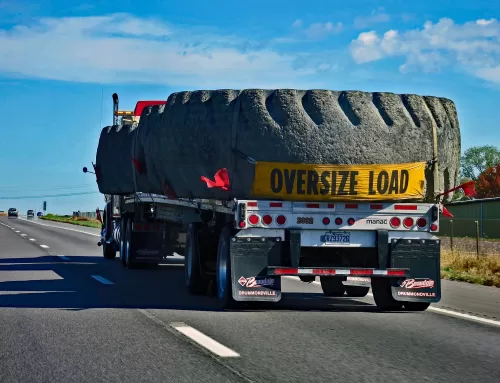
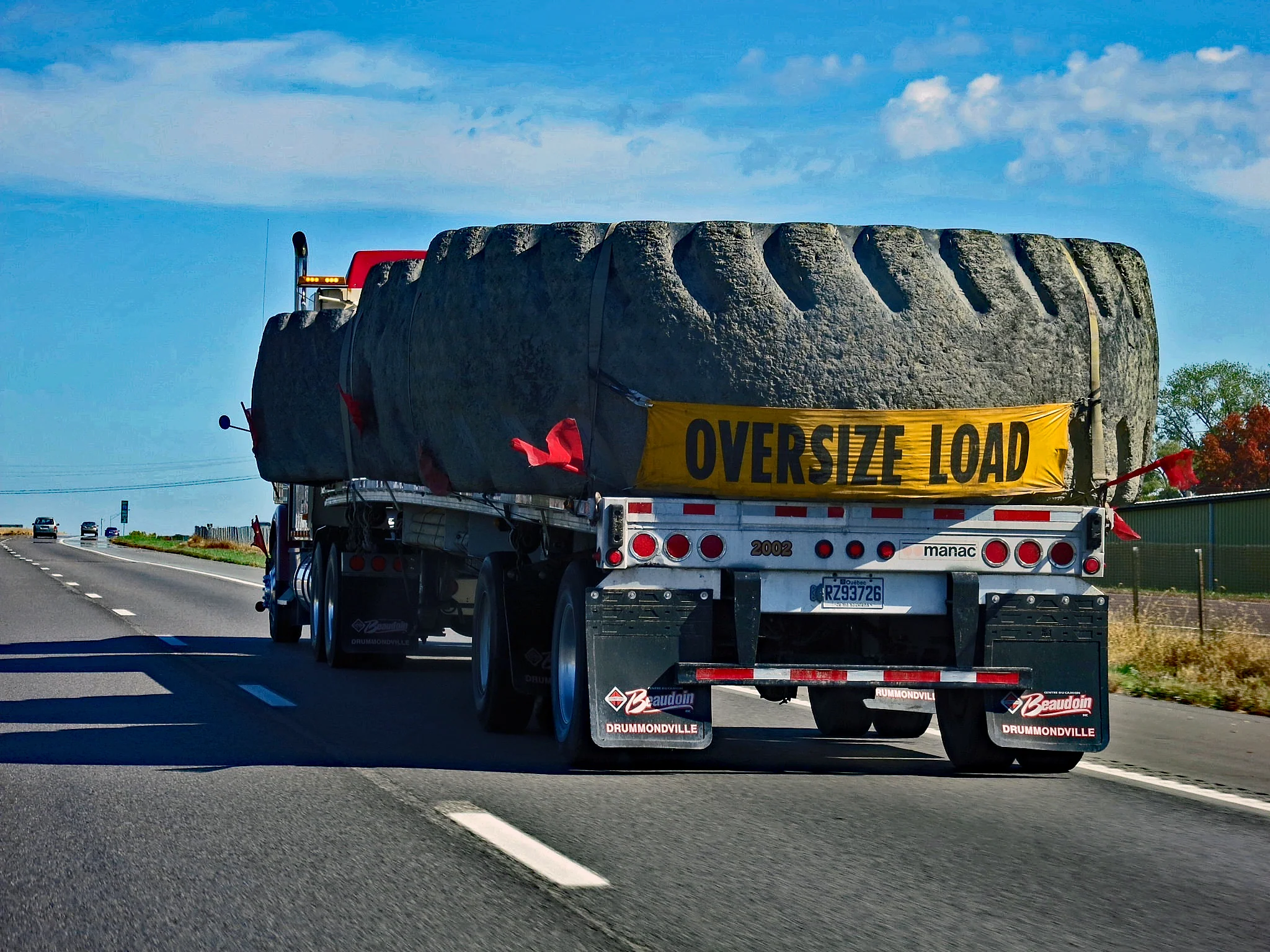
Oversize and overweight freight runs on paperwork as much as horsepower. If the machine exceeds legal dimensions or weight, permits may be required across one or several states. Route restrictions, travel-hour limits, escort requirements, and local construction zones can all affect transit time.
That is why pickup appointments for heavy equipment should be realistic. A same-day request might be possible for a legal load with clear details and a ready machine. A permitted load is different. It may need more lead time, especially on multi-state moves.
From Phoenix and across the Southwest, this comes up often on construction and industrial freight. Arizona, California, Nevada, New Mexico, Texas, Utah, and Colorado do not all handle permit routing the same way. If your shipment crosses several states, that planning needs to happen before the truck is rolling.
Site conditions can make or break the move
A good trailer and a good driver still need a workable pickup site. Can the truck get in and out without backing through active equipment traffic? Is the ground stable enough for loading? Is there room to line up ramps? If the unit does not run, is there a forklift, winch support, or crane available?
These details sound basic, but they are where delays happen. The truck arrives on time, but the machine is blocked in. Or the loading crew is on lunch. Or the jobsite says they can load, but the access road cannot handle the tractor.
The best way to avoid this is simple. Confirm who is loading. Confirm whether the unit runs. Confirm the site contact actually knows the plan. If there is anything unusual, say it before dispatch.
Communication should stay simple and direct
Shippers do not need long explanations during a move. They need clear updates. Pickup confirmed. Loaded and secure. Permit delay. In transit. Delivery window updated. Heavy equipment shipments already have enough moving parts. Silence from the carrier makes every issue worse.
This is where a real operations team matters. If there is a route hold, weather issue, loading delay, or receiver problem, you should hear about it early. No guessing where your load is. No chasing five people for one answer.
What to send before pickup
For most heavy equipment loads, send the make and model, exact dimensions, weight, photos from all sides, pickup and delivery contacts, site notes, and whether the unit runs. If there are loose attachments, include those too. A few clear photos can prevent hours of confusion.
That is especially true when the load has been used in the field. Photos show what changed since the spec sheet was printed.
A practical flatbed shipping guide for heavy equipment shippers
The best shipments are usually the least dramatic. The trailer is right. The dimensions are accurate. The machine is ready. The securement points are clear. Pickup happens on time, and delivery happens without a scramble.
That does not mean every move is simple. Some loads need permits. Some need escort planning. Some need alternate trailer options if site conditions change. But most problems can be avoided when the shipper and carrier handle the details up front.
If you move heavy equipment regularly, build a repeatable process. Keep current dimensions on file. Keep machine photos updated. Know which sites load efficiently and which ones need more time. Use carriers that operate real equipment and communicate like operators, not sales reps.
Heavy equipment shipping is not about fancy language. It is about execution. When the load is planned right from the start, the rest of the trip gets a lot easier.
Need capacity on this type of freight? Connect Express LLC provides asset-based flatbed transportation across the Southwest and nationwide.
Request a truckload quote: Contact Connect Express or call (844) 474-8963.