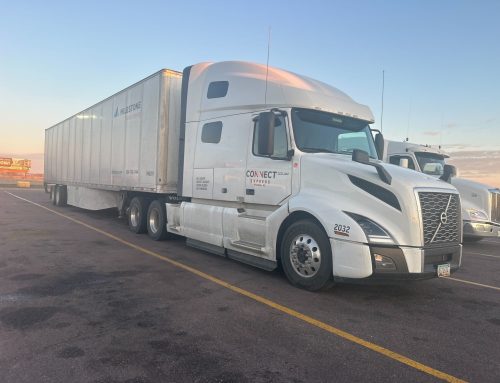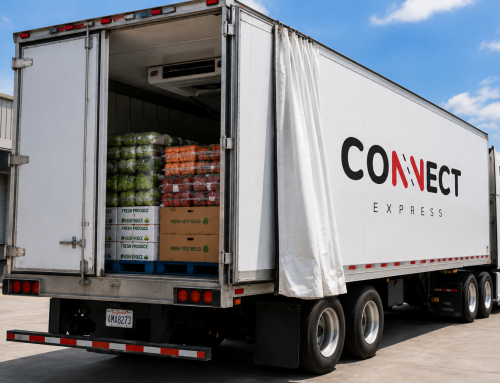
When you book refrigerated trucking services, you are not asking for “a reefer if we have one.” You are asking for a monitored set point, a trailer already at temperature when it backs to the dock, and a paper trail you can pull if receiving questions the load. That is the buyer job. Dry freight can ride in an enclosed van. Temperature-sensitive freight cannot.
Connect Express LLC dispatches that work from a Glendale terminal at 5701 W Maryland Ave, a West Valley origin in the Phoenix metro. This post is a shipper checklist that supports our refrigerated trucking services hub: what to put on the rate confirmation before pickup, what dispatch will ask back, and how reefer sits next to dry van and dedicated. Summer ambient in this market is an operating problem on the run, not the product you are buying. The unit and the SOP are.
What “refrigerated trucking services” actually include
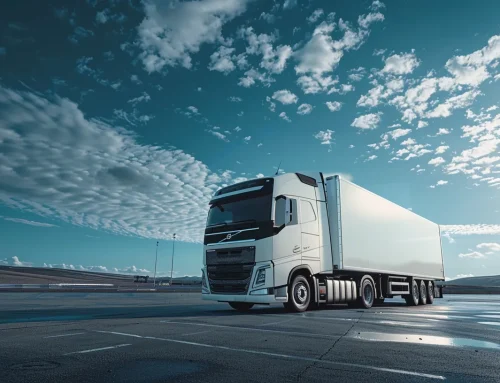
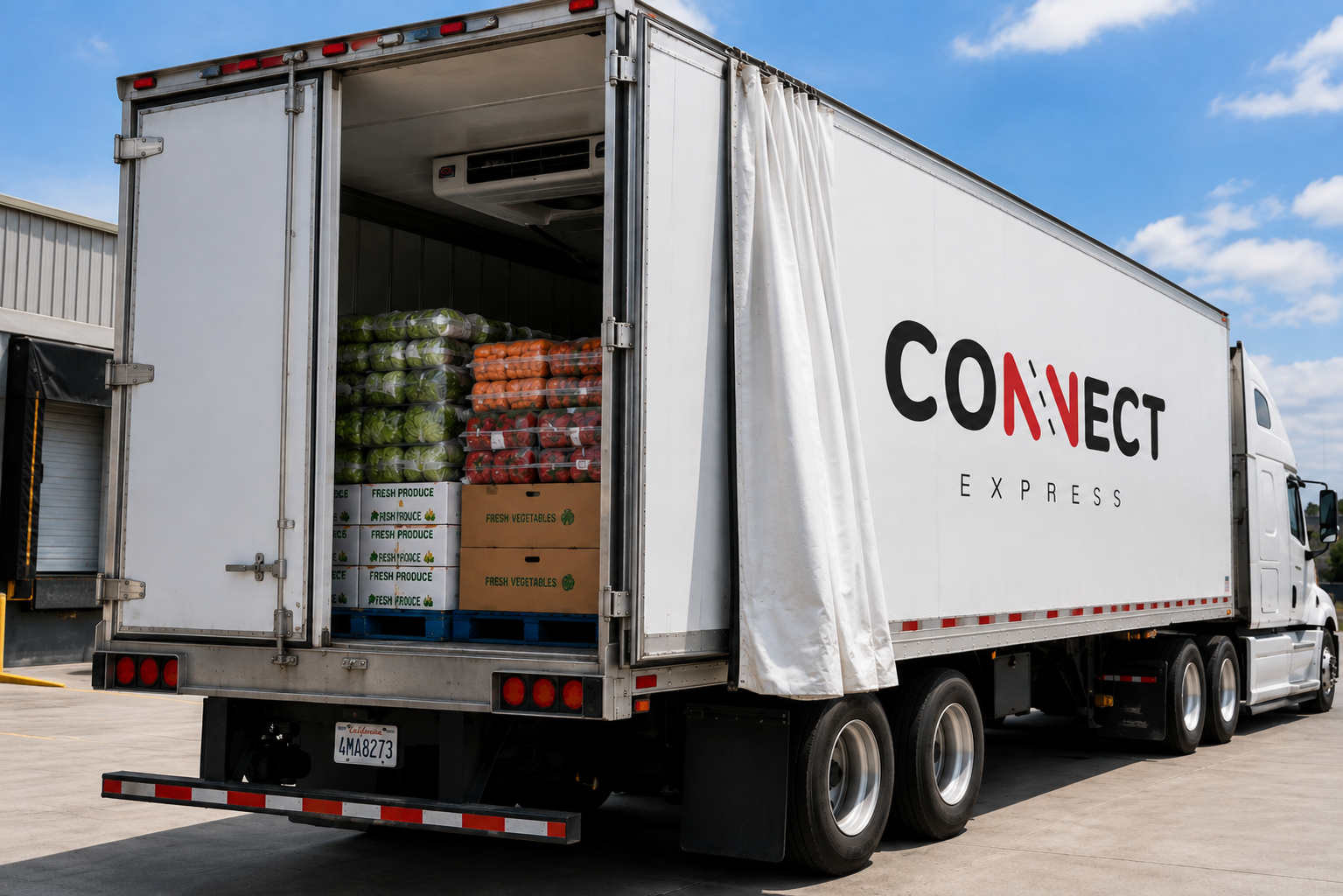
A refrigerated truckload is continuous temperature control in a 53-foot reefer, not a dry van with a blanket or a hope that the freight “won’t sit long.” The trailer is a controlled space. The unit holds a set point. The carrier’s job is to keep that space inside the range you named from pre-cool through delivery, and to show you the history if you need it.
A 53-foot reefer, not a workaround. Produce, dairy, packaged beverages, and other cold-chain freight belong in a temperature-controlled trailer. If the commodity does not need a set point, it belongs on dry van.
Pre-cool to the set point before loading. The trailer should be at product temperature before freight leaves the cooler. Loading into a warm box and “letting the unit catch up” is not a pre-cooled trailer.
In-transit monitoring and a downloadable temperature history. Claims, retail receiving, and customer QA do not stop at “the unit was on.” They want set point, return air, and a download when destination pulp looks off. Ask for that on the confirmation if you will need it.
Product classes, with a qualifier. Connect Express LLC handles temperature-controlled truckload for produce, dairy, beverages, and pharma or life-science freight when the load matches the equipment and the SOP — not a blanket “we haul everything.” If the product needs dual temp, a logger protocol, or a pack-out the trailer cannot support, say so before pickup.
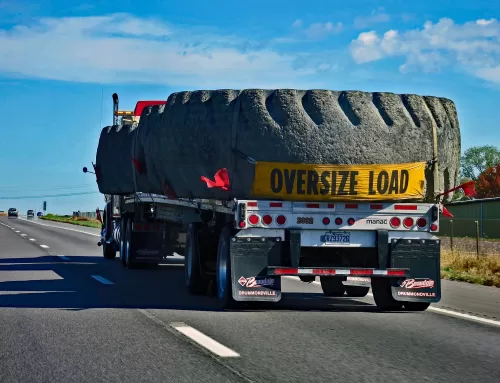
Keep the rest of the fleet in its own lane. Ambient freight stays on dry van. Repeating volume on a fixed schedule is a dedicated conversation. Freight that exceeds legal dimensions is overdimensional. The refrigerated hub is for temperature-controlled truckload.
Set point vs. product, not vs. outdoor air
You specify the product set point, and any dual-temp needs, because the product has a range. The outdoor air does not. A produce load that needs to hold in the mid-30s is not “colder than Phoenix in August.” It is a number on the rate confirmation. A beverage load that can ride warmer still needs that warmer number written down. A dairy load that cannot tolerate a thaw at a live unload needs the set point and door discipline, not a note that “it was hot that day.”
Connect Express LLC will confirm that the trailer can hold the range you named. We will not invent a house default such as “we always run 34°F.” If your vendor sheet says 34–36°F, put 34–36°F on the confirmation. If you need dual-temp, say which compartments. If you only need a dry van, do not book a reefer to be safe.
Pre-cool, pulp, and door discipline
The trailer should be at temperature before freight hits the dock — box air and walls in range, not a unit flipped on in the yard five minutes ago. If your cooler is at 34°F and the trailer is at 55°F, the first hour of the trip is a temperature event even if the unit is working.
Pulp is the product. Air temperature is the box. They are not the same reading. If you need pulp on load, write it on the confirmation and have a probe at the dock. Closed-door discipline is part of the service: load, close, confirm the unit is in cycle, then roll. Loading delays and “the last three pallets are still in the cooler” are time with the doors open, not paperwork problems. Treat door-open dwell as a dock metric. Pre-cool, pulp, and door time are the three controls you have before the truck is on the road.
When Arizona heat shows up on a reefer run
Phoenix–Glendale summer pavement and yard dwell are why the service exists, not a separate product. Ambient is not the set point. The unit is. A trailer on West Valley asphalt in July will take longer to pull down, and fight harder every time the doors open, than the same trailer on a January morning. That is why pre-cool cannot be optional, and why a download matters when receiving asks why pulp was high.
Door-open time at a Phoenix DC is the same SOP as a winter Midwest dock — pulp, close the doors, confirm cycle — with a higher cost if someone ignores it. Specify the set point, require pre-cool, ask for the reefer download when you need a record, and book the load as temperature-controlled freight, not as a weather story.
Specs shippers should put on the rate confirmation
If it is not on the confirmation, it is a phone call at pickup. Put the booking fields in writing.
- Commodity and required set point (and range). Name the product, the set point, and the acceptable band. Call out dual-temp if you have it. Do not write “keep cold.”
- Pickup and delivery windows, and appointment type. Live vs. drop, first-come vs. scheduled, and what happens if the truck misses the window.
- Origin: Glendale / Phoenix metro vs. inland reload. Connect Express LLC originates from 5701 W Maryland Ave in Glendale. If the freight is a reload or another metro dock, say which door and which hours.
- Reefer download required Y/N; pulp on load and unload. If QA or the consignee will ask for a download, require it at booking.
- Pallet count, weight, and stack rules. Cube, weight, and whether pallets can be stacked. Leave the airflow path the unit needs.
- After-hours or weekend live vs. drop. State the window you need. Do not assume Saturday live is covered because weekday live is. Dispatch should confirm coverage for that lane and day — not a generic “we run 24/7.”
Those fields are how Connect Express LLC can tell you, before dispatch, whether the load fits the equipment and the schedule.
What Connect Express will ask back
Dispatch will not quote from a commodity name alone. Expect origin and destination, pickup date and appointment, commodity, set point and range, pallet count and weight, live or drop, and whether you need a download or pulp record. The number on-site is (844) 474-8963. Hours for the Glendale office are on the contact page; send the tender there for a truckload quote in writing.
Equipment on this service is temperature-controlled trailers with monitored set points. That is the operational claim — not on-time percentages, rejection rates, or “never a temperature deviation” language. If you need a download, ask for it. If you need a dual-temp trailer or a pharma SOP the unit cannot support, say that in the first message so dispatch can accept or decline.
You should not expect a rate invented in a blog post or a recruiting pitch. You should expect a yes or no on the equipment, a clear set point on the dispatch, and a trailer that is supposed to be pre-cooled to that number before it hits your dock.
How this service sits next to dry van and dedicated
Dry freight stays dry van. If you are moving ambient grocery, dry ingredients, or packaged goods with no set point, book dry van. A running reefer is the wrong trailer for weather protection only.
Repeating reefer volume is a dedicated conversation, not a one-off blog pitch and not a recruiting ask. If you have a weekly produce, dairy, or beverage pattern out of the Phoenix metro, talk to operations about dedicated capacity — trucks and drivers on your lane — instead of spotting each load as a one-time tender. Overdimensional stays overdimensional. Do not mix those asks in one tender.
The equipment, set points, and monitoring live on the refrigerated transportation service page; this post is the shipper spec sheet you should fill in before pickup.
Request a refrigerated quote
If you have a temperature-controlled truckload to move, send the specs to dispatch. Use the shipper form on Contact — origin, destination, commodity, set point, pickup window, pallet count, and whether you need a download. That page is “transport with us,” not a hiring form.
You can also call (844) 474-8963. Connect Express LLC is at 5701 W Maryland Ave, Glendale, AZ. Do not use this page to shop a rate. The quote is whether we can cover the set point, the window, and the trailer for your freight.
Bring the confirmation fields listed above. A complete tender gets a faster yes or no than a commodity and a city pair. If the load is ambient, say so and we will point you to dry van. If it is repeating, say so and we will talk dedicated. If it is a one-time reefer from the West Valley, send the set point and the appointment.
This post is for shippers who have to specify refrigerated trucking services before a trailer shows up — not for drivers looking for a seat. Named set point, pre-cooled trailer, pulp and door discipline, and a download when you need a record: that is the work. Connect Express LLC runs it from Glendale, 5701 W Maryland Ave, as a West Valley origin in the Phoenix metro.
Use the refrigerated transportation hub for the service description. Use Contact when you are ready to tender a load. Call (844) 474-8963 if dispatch should see the appointment the same day. Put the specs on the confirmation. That is what you should specify before pickup.