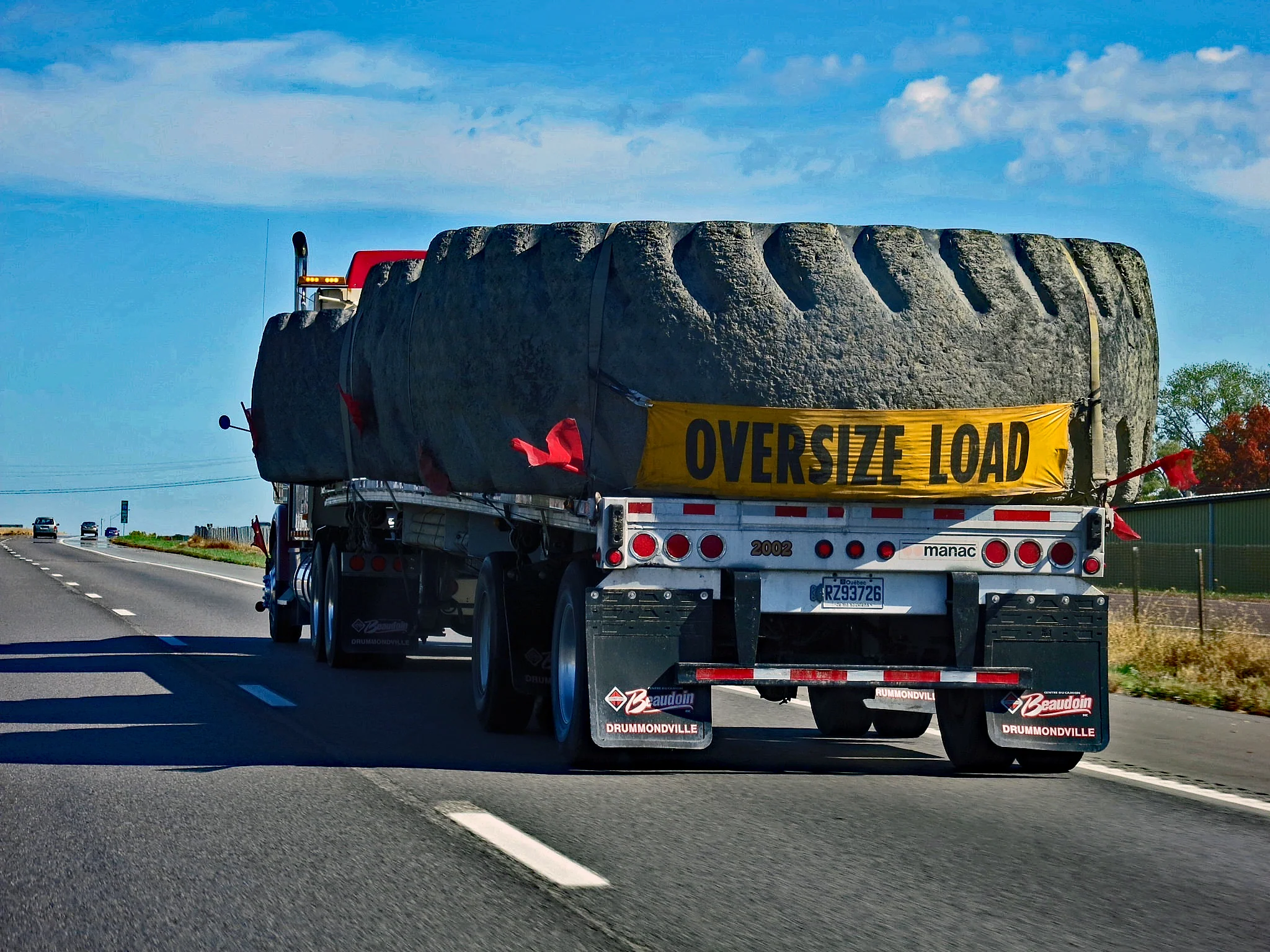
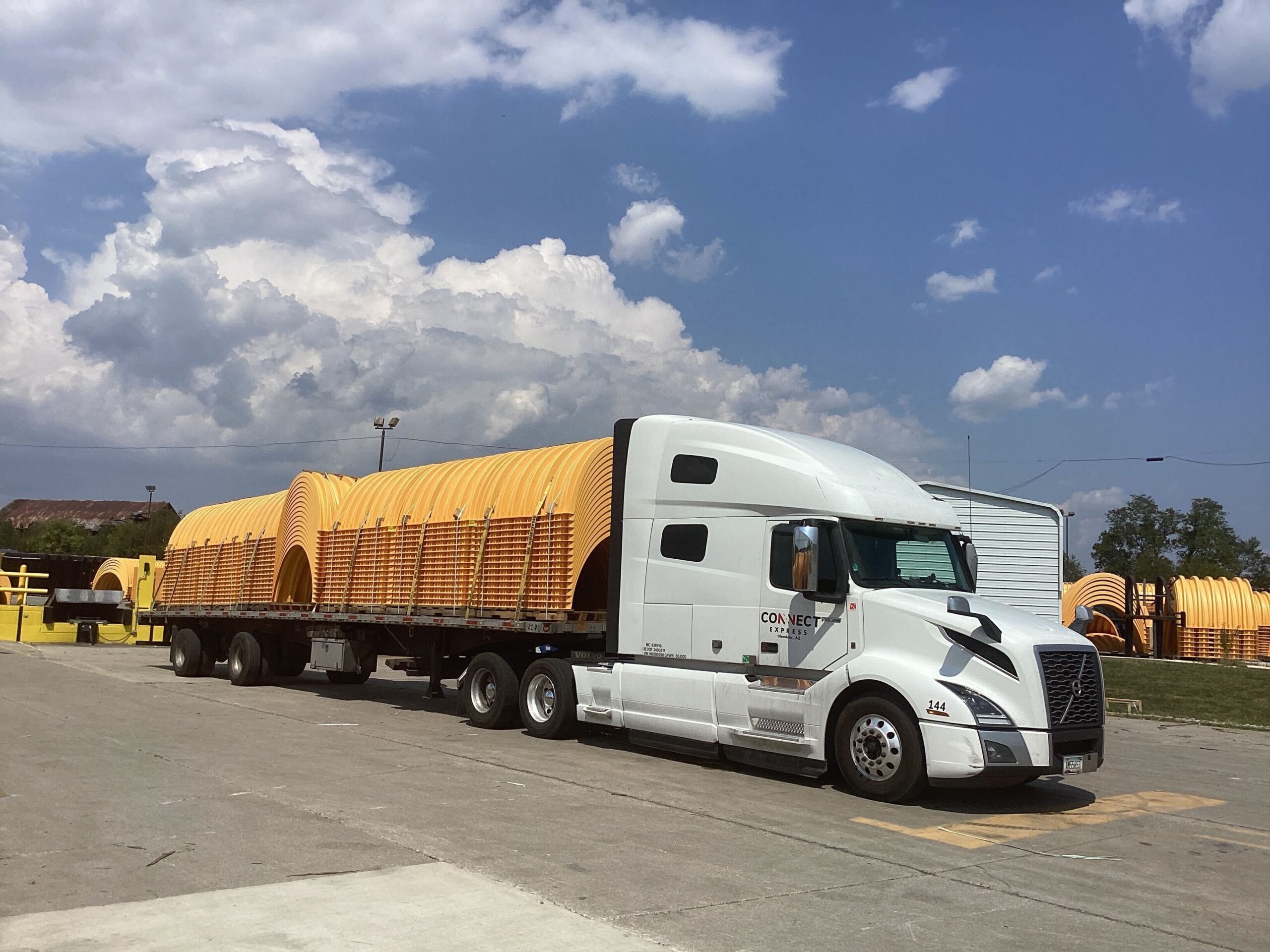
A request that just says “need an oversize truck” usually stalls while dispatch asks the same follow-up questions one at a time. The fastest oversized shipping quotes start with complete load details: dimensions, weight, how the freight loads, where it goes and when. This checklist covers what Connect Express LLC dispatch needs from you to review an overdimensional load properly, and which details decide whether the move needs permits, escorts or special routing.
What dispatch needs for oversized shipping quotes
Every oversize review starts with the same core numbers. Send them in the first message and you skip most of the back-and-forth.
Loaded length, width and height
Give the length, width and height of the freight itself, in feet and inches. Remember that the trailer deck adds to freight height, so a piece that looks short on the ground can end up over height once it is loaded. Dispatch uses these numbers to pick the trailer and check them against federal and state limits. If you know the piece will overhang the deck at the front, rear or sides, say how far.
Total weight, heaviest piece and center of gravity
Send the total shipment weight and the weight of the heaviest single piece. If the center of gravity is off-center (common on machinery with a boom, bucket or engine at one end), note where it sits. Weight drives axle configuration and decides whether the load is overweight as well as oversize, which our oversize and overweight permits page explains in more detail.
Measured vs estimated numbers
Tell us whether each figure is measured or estimated. Estimates are fine for a first look, but permits are issued against real dimensions, and a few inches can change the permit, the route or the trailer. When you can, measure the loaded configuration you will actually ship. Our guide to oversized load planning walks through why exact numbers matter.
Commodity, piece count and how the load travels
Make, model and attachments
For machinery, send the make and model and say whether attachments, buckets, booms or counterweights ship on the unit or separately. Removing an attachment can sometimes bring a load back under a limit. A spec sheet or a photo with a tape measure in frame helps. If you are moving equipment regularly, see our overview of heavy equipment transport.
Orientation, lift points and tie-down points
Tell us how the piece must ride (upright, on its side, a set direction) and where the rated lift and tie-down points are. Drivers secure loads under the FMCSA cargo securement rules, which are codified in 49 CFR Part 393 cargo securement. Heavy machinery has its own section in the FMCSA heavy equipment securement handbook. Knowing your tie-down points up front helps dispatch plan chains, binders and edge protection.
Loading, unloading and site access at both ends
Crane, forklift, rigging or drive-on
Say how the freight gets on and off the trailer at each end: crane, forklift, rigging crew or driven on and off under its own power. Note who supplies the equipment and operator. Drive-on loads may call for a different trailer than crane-loaded ones.
Jobsite gates, ground and receiving hours
Describe access at pickup and delivery: gate width, turning room, ground conditions (paved, gravel, soft dirt), overhead wires or canopies, and receiving hours. Long and wide trailers need room to turn and park. Construction sites in particular can change week to week, so our notes on Arizona jobsite freight are worth a look before you book.
Legal-size or permit-sensitive? Flag it early
If you already suspect a load is over legal size or weight, say so in your first message. It changes the timeline more than anything else on this list.
Federal size baselines vs state permits
The FHWA federal size and weight program sets the baseline. Vehicle width on the National Network is set in 23 CFR Part 658 width and length limits, and the FHWA summary of federal truck size and weight limits explains which limits are federal and which are left to the states. The National Network for large trucks defines the roads those federal rules cover. Height limits and most oversize permits are handled state by state, and FHWA’s review of state oversize/overweight permit practices shows how much those rules vary.
Arizona oversize/overweight permits
For moves in or through Arizona, ADOT’s Motor Vehicle Division issues Arizona oversize/overweight permits. The wider list of ADOT commercial vehicle permits covers the other permit types. This article is general information, not legal advice. Always confirm the current rules with the issuing state. If you need help, read about our oversize load permit support and the basics of wide load permit regulations.
Escorts, pilot cars and travel-time limits
Wider, longer or taller loads may need pilot cars or escorts, and many states restrict when oversize loads can travel (for example, daylight only or no weekend or holiday moves). The requirements differ by state and by dimension. FHWA publishes pilot car and escort best practices, and the Commercial Vehicle Safety Alliance works on enforcement consistency across jurisdictions. Multi-state routes mean each state’s rules apply in turn.
Route, states crossed and pickup window
Send full pickup and delivery addresses with ZIP codes, not just cities. List any states you know the load will cross, and any route restrictions at the sites. Then give your pickup window and your required delivery date, and say which one is firm. Permit processing, escorts and travel-time limits all affect scheduling, so a flexible window gives dispatch more options. See how to schedule oversized transport for the planning steps, and have your paperwork ready using our list of documents for oversize loads.
Common gaps that slow a quote
Most delays come from a few missing details:
- Dimensions without units or context. “12 wide” could mean feet or inches, freight or loaded. Label every number.
- Weight of the shipment, but not the heaviest piece. Axle loading depends on the single heaviest item, not just the total.
- No delivery-site contact. Oversize drivers often need to confirm access and unloading before arrival, so include a name and phone number for both ends.
- A firm date with no flexibility noted. If permits or escorts are involved, the date may need to move. Tell us early whether it can.
- Missing photos. One clear photo of the piece and its lift points can answer several questions at once.
Fixing these before you send means dispatch can start the review instead of starting a list of questions.
When a flatbed quote fits instead
Not every big piece is oversize. If your freight fits within legal width, height and weight once loaded, it may move as a standard open-deck load. In that case, use our checklist for flatbed shipping quotes. If you are not sure, send the numbers and dispatch will tell you which way it goes. Legal-size pieces like that move through our flatbed trucking service.
Request oversized shipping quotes from Connect Express LLC
Copy this checklist into your email or contact form:
- Commodity, make and model, and piece count
- Loaded length, width and height (measured or estimated)
- Total weight and heaviest-piece weight, plus center of gravity if off-center
- Attachments on or off, orientation, lift and tie-down points
- Loading and unloading method at each end, and who supplies equipment
- Site access: gates, ground, overhead clearance, receiving hours
- Pickup and delivery addresses with ZIP codes, and states crossed
- Pickup window and delivery date, and which is firm
- Any known permit, escort or route requirements
- Photos or spec sheets
Connect Express LLC is a Glendale trucking company.
Connect Express LLC
5701 W Maryland Ave, Glendale, AZ 85301
Phone: 480-401-1998
Email: admin@connectexpressllc.com
FAQ
What information do I need for an oversized shipping quote?
Send the commodity, loaded length, width and height, total and heaviest-piece weight, how it loads and unloads, pickup and delivery addresses, and your pickup window. Note whether numbers are measured or estimated, and include photos or spec sheets if you have them.
What size load is considered oversized?
Federal rules set a 102-inch (8 feet 6 inches) vehicle width standard on the National Network under 23 CFR Part 658. States set their own height limits and decide when a permit is required, so a load can be oversize in one state and legal in another. Check with each state on the route.
Do I need a permit to ship an oversize load in Arizona?
Likely, if the loaded vehicle exceeds Arizona’s legal size or weight limits. ADOT’s Motor Vehicle Division issues oversize/overweight permits and lists the requirements on its permit pages. This is general information, not legal advice; confirm with ADOT before the move.
When does an oversize load need a pilot car or escort?
It depends on the state and the load’s dimensions. Each state sets its own escort thresholds, and some also limit travel times. FHWA’s pilot car and escort best practices guide gives background, but the permit for each state is what sets the actual requirement.
How long does it take to get an oversized shipping quote?
There is no fixed timeline, because it depends on the load, the route and any permits involved. A complete request with measured dimensions, weights and site details means fewer follow-up questions, which is the quickest way to a reviewed quote.
Ready to send your load details?
Complete details are what turn a vague request into a real review. When your checklist is ready, request an oversized shipping quote online, call 480-401-1998 or email admin@connectexpressllc.com.